Sports and technology have always shared a close relationship, evolving together to push the boundaries of human performance, fairness, and entertainment. From simple timing devices to advanced analytics powered by artificial intelligence, innovation has transformed how athletes train, compete, and recover. Now, a new concept is gaining attention in the sports technology ecosystem: Trinou.
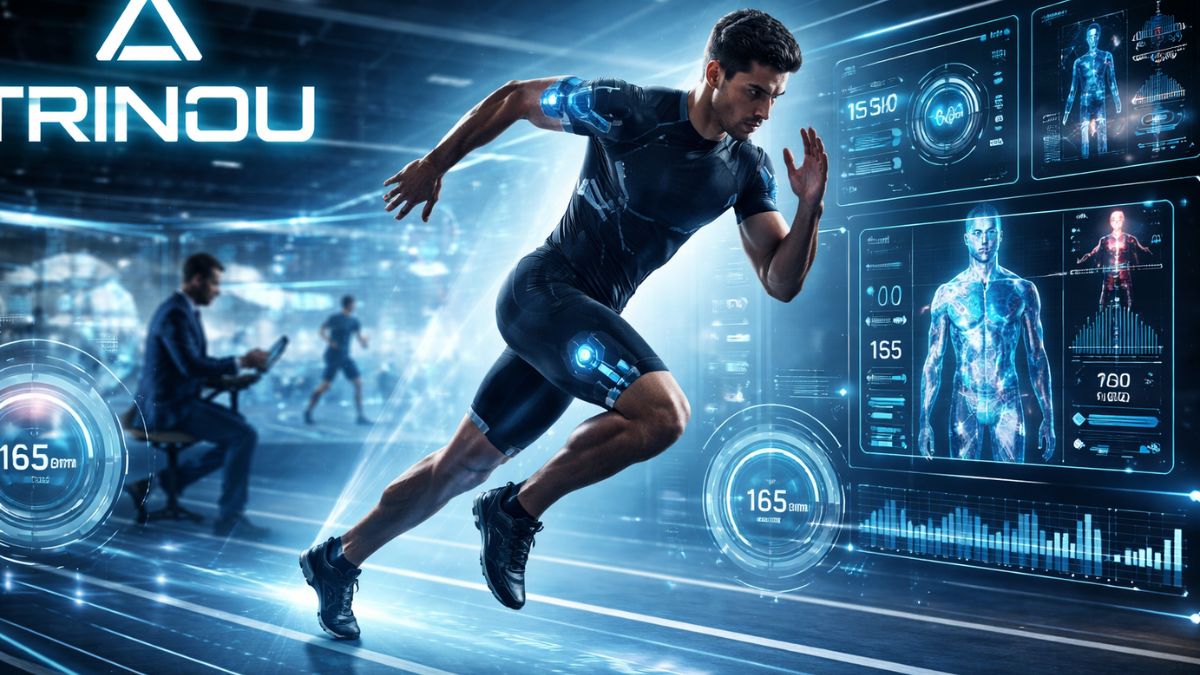
While still emerging, Trinou represents a powerful fusion of data intelligence, biomechanics, and immersive technology designed to redefine athletic performance. It is not just a single device or software—it is an integrated ecosystem that connects athletes, coaches, analysts, and fans in real time.
In this comprehensive blog, we explore what Trinou is, how it works, its applications across sports, and why it could become one of the most impactful advancements in the future of athletics.
What is Trinou?
Trinou is a multi-layered sports technology framework that integrates three core components:
-
Real-time biometric tracking
-
AI-powered performance analytics
-
Immersive feedback systems (AR/VR interfaces)
The name “Trinou” is often interpreted as representing a triangular synergy—the combination of body, data, and environment. Unlike traditional sports tech tools that focus on one aspect (such as wearables or video analysis), Trinou creates a unified system where all data streams interact seamlessly.
In essence, Trinou transforms raw athletic activity into actionable intelligence—instantly.
The Core Components of Trinou
1. Biometric Data Collection
At the heart of Trinou lies a network of advanced wearable sensors. These devices go far beyond basic fitness trackers.
They measure:
-
Heart rate variability
-
Muscle activation (EMG signals)
-
Oxygen consumption (VO2 levels)
-
Joint angles and movement efficiency
-
Fatigue indicators
Unlike traditional wearables, Trinou sensors are designed to be non-intrusive and ultra-lightweight, allowing athletes to perform naturally while collecting highly precise data.
2. AI-Powered Analytics Engine
The second layer is where Trinou truly stands out. The collected data is fed into an advanced AI engine that:
-
Detects performance patterns
-
Identifies inefficiencies in movement
-
Predicts injury risks
-
Suggests optimized training adjustments
This system uses machine learning models trained on thousands of athletes, enabling personalized insights rather than generic recommendations.
For example:
-
A sprinter may receive stride optimization suggestions
-
A football player may get fatigue warnings before injury occurs
-
A swimmer may improve stroke efficiency through real-time feedback
3. Immersive Feedback Systems
The third component of Trinou is its use of augmented reality (AR) and virtual reality (VR).
Athletes can:
-
Visualize their movement patterns in 3D
-
Train in simulated match environments
-
Receive live visual overlays during practice
Imagine a basketball player seeing their optimal shooting arc projected in real time, or a cricketer visualizing ball trajectories before facing a delivery. This level of feedback bridges the gap between analysis and execution.
How Trinou Works in Practice
To understand Trinou’s impact, let’s look at a typical workflow:
-
Data Capture
Sensors collect real-time physiological and biomechanical data during training. -
Data Processing
AI algorithms analyze the data instantly, comparing it with performance benchmarks. -
Insight Generation
The system identifies areas for improvement or potential risks. -
Feedback Delivery
Insights are delivered via mobile apps, dashboards, or AR/VR interfaces. -
Performance Optimization
Athletes adjust their techniques immediately, creating a continuous improvement loop.
This real-time cycle is what makes Trinou revolutionary—it eliminates delays between performance and correction.
Applications Across Different Sports
Football (Soccer)
In football, Trinou can:
-
Monitor player fatigue during matches
-
Optimize positioning and movement
-
Reduce injury risks through load management
Coaches can make data-driven substitutions and tactical decisions in real time.
Cricket
For cricket players:
-
Bowlers can refine their action to reduce stress on joints
-
Batsmen can analyze shot timing and angles
-
Fielders can improve reaction times
Trinou could be particularly valuable in preventing injuries caused by repetitive stress.
Basketball
In basketball:
-
Shooting accuracy can be enhanced through motion tracking
-
Player spacing and movement can be optimized
-
Jump mechanics can be analyzed to prevent knee injuries
Athletics (Track and Field)
Sprinters and runners benefit greatly:
-
Stride length and frequency optimization
-
Energy expenditure analysis
-
Real-time pacing strategies
Esports
Interestingly, Trinou also extends to esports:
-
Tracks reaction time and focus levels
-
Monitors mental fatigue
-
Enhances cognitive performance
Benefits of Trinou Technology
1. Injury Prevention
One of the biggest advantages of Trinou is its ability to predict injuries before they happen. By analyzing fatigue patterns and movement inefficiencies, the system alerts athletes and coaches early.
2. Personalized Training
Every athlete is unique, and Trinou embraces that. Instead of generic plans, it provides:
-
Customized drills
-
Adaptive training loads
-
Individual performance benchmarks
3. Real-Time Feedback
Traditional coaching often relies on post-session analysis. Trinou changes that by delivering instant insights, allowing athletes to correct mistakes immediately.
4. Enhanced Performance
By optimizing every aspect of movement and physiology, Trinou helps athletes:
-
Improve efficiency
-
Increase endurance
-
Maximize output
5. Data-Driven Decision Making
Coaches and teams can make informed decisions based on accurate data rather than intuition alone.
Challenges and Limitations
Despite its potential, Trinou faces several challenges:
1. High Cost
Advanced sensors, AI systems, and AR/VR tools make Trinou expensive, limiting accessibility for amateur athletes.
2. Data Privacy Concerns
Collecting detailed biometric data raises questions about:
-
Data ownership
-
Security
-
Ethical usage
3. Learning Curve
Athletes and coaches need time to understand and effectively use the system.
4. Over-Reliance on Technology
There is a risk that excessive dependence on data could reduce the role of intuition and experience in sports.
Trinou vs Traditional Sports Technology
| Feature | Traditional Tech | Trinou |
|---|---|---|
| Data Collection | Limited | Comprehensive |
| Analysis | Post-session | Real-time |
| Feedback | Delayed | Instant |
| Personalization | Basic | Advanced |
| Immersion | None | AR/VR integration |
This comparison highlights why Trinou is considered a next-generation solution.
The Role of Artificial Intelligence in Trinou
AI is the backbone of Trinou. It enables:
-
Predictive analytics
-
Pattern recognition
-
Automated coaching insights
Machine learning models continuously improve as more data is collected, making the system smarter over time.
This creates a self-evolving ecosystem where performance insights become increasingly accurate.
Future Potential of Trinou
1. Integration with Smart Stadiums
In the future, Trinou could be integrated into stadiums, allowing:
-
Real-time player analytics during live matches
-
Enhanced fan experiences with data overlays
2. Youth Development Programs
Young athletes can benefit from early exposure to data-driven training, accelerating skill development.
3. Rehabilitation and Recovery
Trinou can play a crucial role in:
-
Monitoring recovery progress
-
Designing rehabilitation programs
-
Preventing re-injury
4. Global Accessibility
As technology becomes more affordable, Trinou could reach grassroots levels, democratizing elite training tools.
Ethical Considerations
As with any advanced technology, Trinou raises important ethical questions:
-
Who owns the athlete’s data?
-
Can data be used for unfair advantages?
-
How do we ensure equal access?
Addressing these concerns will be essential for widespread adoption.
Trinou and the Evolution of Coaching
Coaching is no longer just about observation and experience. With Trinou:
-
Coaches become data interpreters
-
Training becomes more scientific
-
Decision-making becomes more precise
However, the human element remains crucial. The best results will come from a balance between technology and intuition.
Real-World Scenarios
Scenario 1: Injury Prevention
A football player shows signs of fatigue during training. Trinou detects abnormal muscle strain and alerts the coach. The player is rested, preventing a potential injury.
Scenario 2: Performance Optimization
A sprinter uses Trinou to analyze stride mechanics. Small adjustments improve efficiency, leading to faster race times.
Scenario 3: Tactical Advantage
A basketball team uses real-time data to adjust strategies during a game, gaining a competitive edge.
Why Trinou Matters
The significance of Trinou lies in its ability to bridge the gap between data and action. It transforms complex analytics into practical insights that athletes can use immediately.
In a world where margins of victory are incredibly small, this advantage can be game-changing.
Conclusion
Trinou represents a bold step forward in sports technology. By combining biometric tracking, artificial intelligence, and immersive feedback systems, it offers a holistic approach to performance optimization.
While challenges such as cost and data privacy remain, the potential benefits far outweigh the limitations. As the technology matures, Trinou could become a standard tool in professional and amateur sports alike.
The future of sports is not just about physical strength or skill—it is about intelligent performance, where every movement is guided by data and every decision is optimized for success.
Trinou is not just a trend. It is a glimpse into the future of athletics.