Bardoek, In the ever-spinning carousel of fashion, where trends flicker and fade with the seasons, a profound shift is underway. It is a movement away from the disposable, the ephemeral, and the ethereal, and toward the grounded, the durable, and the authentic. At the heart of this shift lies a fabric with a name as sturdy as its weave: Bardoek. Pronounced bar-dook (from the Dutch ‘barrasdoek’ or later ‘bardoek’), this once-ubiquitous workwear textile is staging a remarkable renaissance, emerging from the overalls of carpenters and the aprons of blacksmiths to claim its place on avant-garde runways and in the capsules of conscious consumers. This is not merely a revival; it is a reclamation. Bardoek, in its essence and its new narrative, represents a philosophical stand—a fabric literally and metaphorically weaving together threads of heritage, sustainability, and uncompromising integrity.
Part I: Unraveling the Weave – A Deep History of Hard Wearing
To understand the power of bardoek’s present, we must first delve into the gritty texture of its past. Originating in Europe, particularly within the Low Countries renowned for their textile prowess, bardoek was the fabric of the Industrial Revolution’s backbone. Its defining characteristic is a dense, heavyweight, plain or twill weave, traditionally composed of 100% cotton, though historical variants included linen or blends. This was not a cloth made for finery; it was armor for labor.
Imagine the 19th-century factory floor: steam, grease, the relentless clang of metal. Here, bardoek thrived. Its tight weave provided remarkable resistance to abrasion—it could withstand the friction of timber, the scrape of brick, the rough edges of machinery. It was a shield against the physicality of creating the modern world. Tailored into boiler suits, dungarees, chore coats, and aprons, bardoek was uniform-adjacent; it signified a class, a profession, a tangible doing. It developed a distinct character with wear: fading to soft, complex hues of blue, grey, or brown from repeated washing and exposure, growing supple at stress points while retaining its structural dignity. Each stain, each fade, was a diary entry of labor.
This history imbues bardoek with what fashion theorist Vikki Karaminas calls “provenancial authenticity.” It carries a story in its very fibers—a story of utility, resilience, and unpretentious functionality. In a contemporary context saturated with synthetic materials designed to mimic authenticity, bardoek is the authentic article. It requires no distressing, no artificial aging; its virtue is inherent and earned. This historical weight is the foundation upon which its modern appeal is built.
Part II: The Alchemy of Modern Interpretation – Bardoek on the Runway and Beyond
The translation of bardoek from industrial catalogues to fashion lookbooks is a masterclass in contextual alchemy. Designers are not simply reproducing workwear; they are deconstructing its language and re-encoding it with new meaning. The process involves several key reinterpretations:
1. Silhouette and Draping: The foremost challenge and opportunity with bardoek is its formidable weight and stiffness. Modern designers confront this not as a limitation, but as a sculptural medium. We see this in the work of designers like Dries Van Noten, who has employed heavy cottons to create structured, architectural pieces that hold their shape with a life of their own. A bardoek jacket becomes a form of soft armor, its sharp lines echoing its utilitarian past but refined into elegance. Conversely, other designers play with contrast, using precise tailoring to create surprisingly fluid shapes from the rigid cloth, or incorporating strategic panels and seams to facilitate movement. The drape of bardoek is a statement of intentionality—it refuses to cling or flutter; it declares.
2. The Elevated Detail: The magic often lies in the juxtaposition. The robust, earthy base of bardoek is elevated through exquisite, often contrasting detailing. Think of Maison Margiela’s Artisanal line, where the deconstruction and reconstruction of familiar garments is a core tenet. A classic bardoek chore coat might be reimagined with intricate seam detailing, lined with iridescent silk, or fastened with hand-worked closures. This contrast highlights the beauty of the raw material while transcending its origins. It’s a dialogue between the rustic and the refined, where neither loses its voice.
3. Color and Finish: While traditional indigo-dyed or natural ecru bardoek remains powerfully evocative, modern iterations explore a broader palette. Mineral-dyed hues, over-dyed techniques creating depth, and even bold, saturated colors transform the fabric’s personality. The finish is also key. Some brands celebrate the raw, unwashed “dry” hand of the fabric, which will evolve dramatically with the wearer. Others pre-wash and garment-dye to achieve immediate softness and a specific fade. This choice becomes part of the brand’s philosophy: offering a fixed aesthetic versus inviting the customer into a co-creative journey of wear.
4. Gender Fluidity: Bardoek’s history is largely masculine-coded, tied to traditionally male-dominated manual labor. Its contemporary reappropriation actively dismantles this. The same oversized, structured bardoek blazer or wide-leg trouser appears in collections presented on all genders. The fabric’s lack of inherent stretch or sheen divorces it from conventional gendered tropes of fashion, making it a powerful canvas for androgynous, strength-forward styling. It speaks to a utility that is human, not masculine.
Part III: The Unbreakable Thread – Bardoek as a Pillar of the Sustainable Fashion Ethos
The resurgence of bardoek is inextricably linked to the rising demand for sustainability in fashion, but it approaches the concept from a uniquely robust angle. Its sustainability is not a trendy add-on; it is a fundamental, multi-faceted property of its being.
1. Durability as the First Principle: In an industry plagued by planned obsolescence and delicate, seasonally discarded items, bardoek is an antithesis. Its raison d’être is to last. A garment made from quality bardoek is not purchased for a season, but for a decade or more. This longevity is the ultimate form of sustainability—it radically reduces the per-wear environmental cost and the churn of waste. It champions the mentality of “buy less, buy better, mend, and keep.”
2. Material Integrity: True bardoek is 100% natural fiber, typically GOTS-certified organic cotton or recycled cotton. It is biodegradable at the end of its immensely long life. Compared to the complex polymer blends of fast fashion, its environmental footprint—especially when sourced responsibly—is simpler and cleaner. Its weight and density also often mean it requires less frequent washing, conserving water and energy.
3. The Patina of Narrative: Bardoek engages the wearer in a slow story. Unlike a garment that looks “worn out,” a bardoek piece develops a “worn in” character. The fades, the honeycombs behind the knees, the slight shine on the collar—these are badges of a life lived. This emotional durability is as important as physical durability. It fosters attachment, care, and repair. Brands like Naked & Famous Denim or Tenue de Nîmes celebrate this, offering lifetime repairs and building communities around the care of heirloom-quality gear. The garment becomes a companion, its evolution a record of the wearer’s own journey.
4. Transparency and Provenance: The bardoek narrative thrives on traceability. Conscious brands using the fabric are often vehemently transparent about its origin: which mill wove it, where the cotton was grown, who cut and sewed the garment. This connects the consumer to a chain of craftsmanship, reinforcing the value of the object beyond its logo. It’s a fabric that demands—and legitimizes—a story.
Part IV: The Weaver’s Hand – Craftsmanship and Contemporary Production
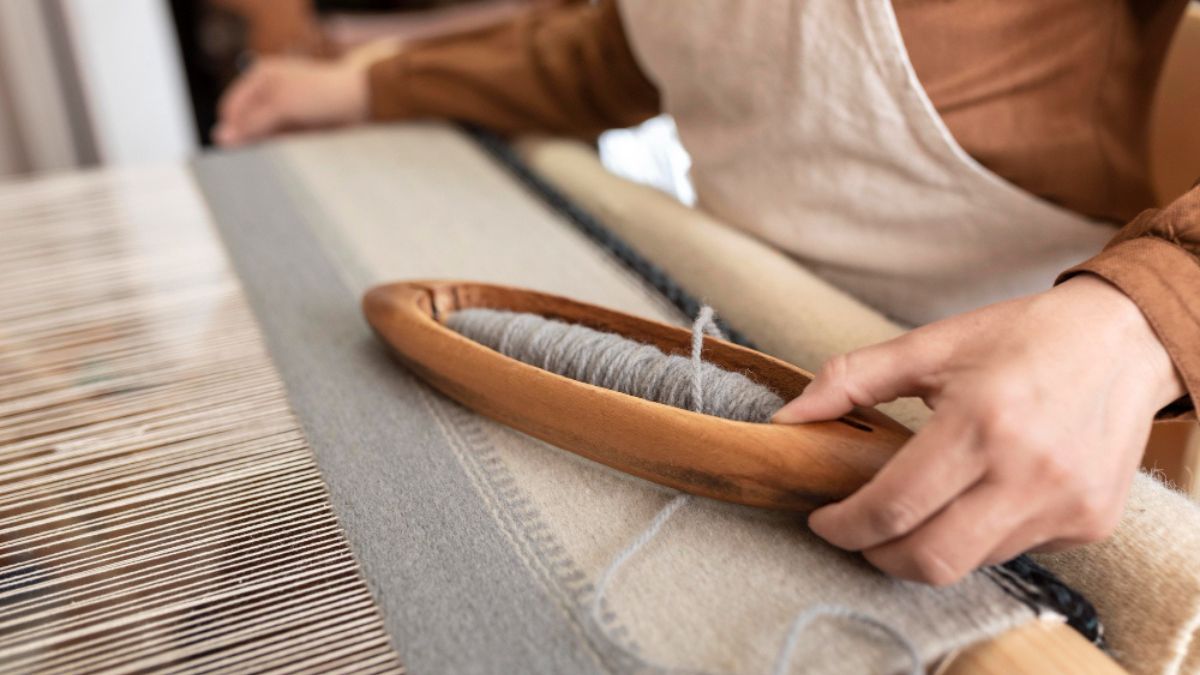
The production of a modern bardoek garment is a negotiation between heritage technique and contemporary ethics. While some ultra-premium brands may source from the last remaining European mills using vintage shuttle looms (which produce a denser, slower, selvedge-edge fabric), most look to specialist mills in Japan, Italy, or the United States renowned for their quality and environmental standards.
The sewing process itself is a feat of engineering. Heavy-duty sewing machines, often vintage or specially adapted, are required to handle the multiple layers of dense fabric, particularly at stress points like pocket corners, belt loops, and side seams. Reinforcements like bar tacks and rivets are not decorative; they are necessary structural elements, faithfully carried over from workwear’s functional requirements. This visible, honest construction becomes an aesthetic virtue—the stitches tell you how the thing is made, proudly.
Furthermore, the rise of small-scale, “maker-led” brands is particularly pronounced in the bardoek niche. These are often one-person or small-team operations where the designer is also the pattern-cutter, marketer, and sometimes sewer. For them, bardoek is a perfect partner: its aesthetic clarity means the design’s cut, fit, and construction details are the stars. There is no print or embellishment to hide behind. It is a test of pure tailoring skill.
Part V: Styling the Substantial – Integrating Bardoek into the Modern Wardrobe
Adopting bardoek into one’s personal style is an exercise in dynamic contrast and tactile appreciation. Here are pathways to weaving it in:
The Foundation Piece: Start with a singular, iconic item. A bardoek chore coat is the quintessential entry point. Layer it over a fine-gauge merino wool turtleneck, a crisp white poplin shirt, or even a delicate silk dress. The clash of textures—the brutish weight against something soft—is the entire point. Pair it with tailored wool trousers or sleek, wide-leg jeans.
The Tailored Statement: A bardoek blazer or suit is a powerful alternative to traditional wool. It carries a different authority—more pragmatic, less corporate. Wear the blazer with faded denim and leather boots, or the full suit with a simple tee and minimalist sneakers for a cutting-edge, relaxed take on tailoring.
The Bottom-Half Anchor: Bardoek trousers—be they wide-leg, pleated, or a straight-leg cargo style—provide an unparalleled foundation. Their structure gives silhouette and presence. Balance them with a lightweight, fluid top: a draped linen shirt, a soft cashmere sweater. The interplay of “heavy” and “light” creates visual and philosophical interest.
The Philosophy of Care: Owning bardoek is a commitment to maintenance. Wash infrequently, inside out, in cold water. Air dry. Embrace stains as part of the history, or learn basic spot-cleaning. When a seam eventually gives way, repair it—visibly, with contrasting thread, if you choose. This active participation in the garment’s life cycle is the final, crucial step in its narrative.
Conclusion: More Than a Fabric, A Manifesto
Bardoek is not passing trend. It is a corrective, a material manifesto for our times. In a digital, disembodied age, it reconnects us to the tactile, the physical, and the enduring. In an industry of fleeting images, it offers substance. In a culture of consumption, it preaches custodianship.
It asks us to reconsider what we value in our clothes: not just how they look on a hanger under lights, but how they feel on our shoulders through a long day, how they change with our lives, and what story they tell about the hands that made them and the world we wish to build. Bardoek, in its humble, mighty threads, weaves a new tapestry for fashion—one where beauty is inseparable from integrity, and style is measured in years, not seasons. It is the fabric of a slower, more thoughtful, more resilient future, and it is already here, broken in and ready for work.