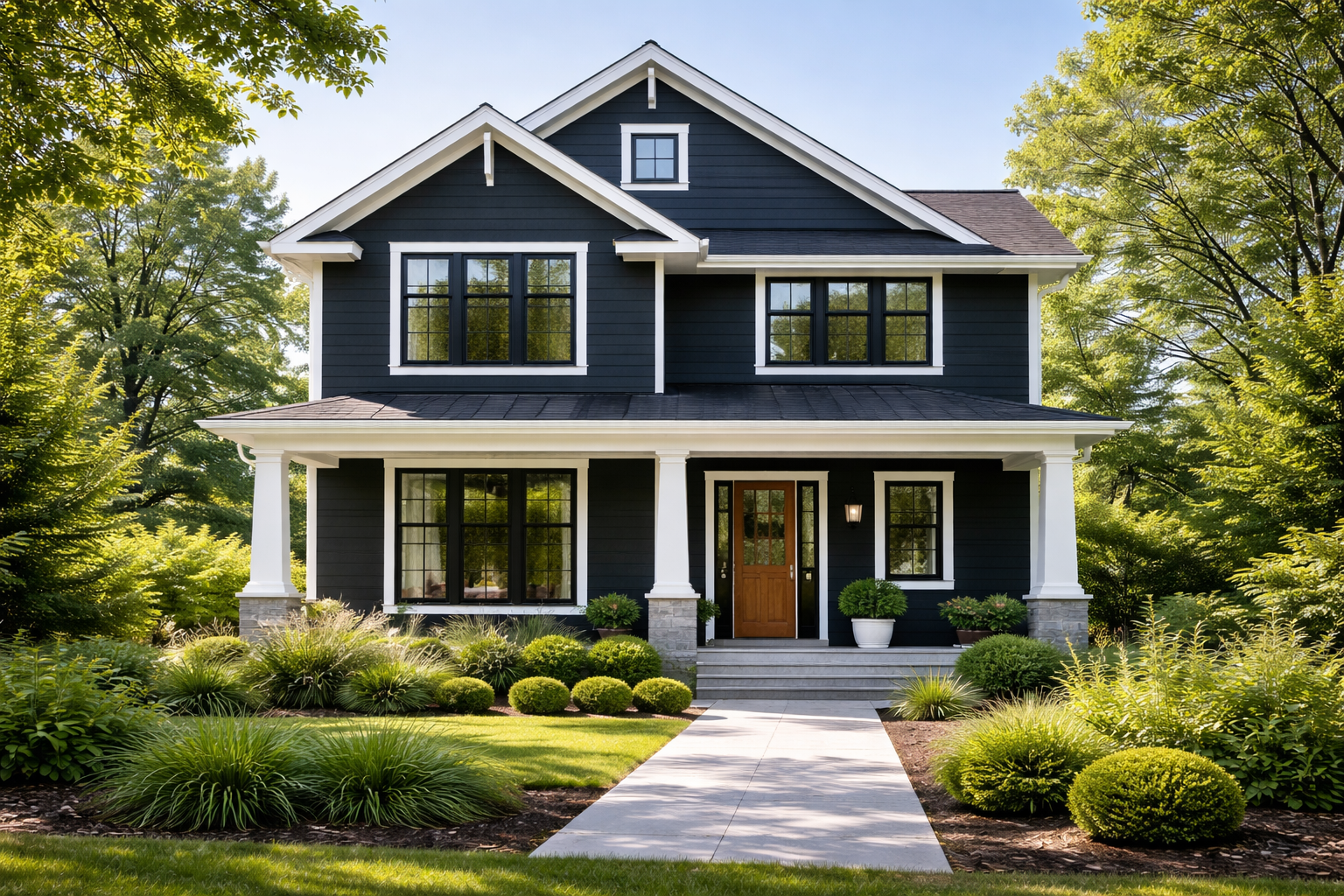
Black House White Trim, When it comes to home design, one of the most striking and memorable trends in recent years is the black house with white trim. This aesthetic combination, bold yet timeless, has been embraced by architects, designers, and homeowners who aren’t afraid to make a statement. But what exactly makes this color scheme so compelling? And why has it surged in popularity in modern architecture? Let’s dive into the world of black houses, white trim, and the powerful impact this design choice has on homes and neighborhoods.
The Rise Black House White Trim: A Modern Take on Classic Design
Traditionally, homes have been painted in softer, neutral colors—creams, light grays, pastel shades, or natural wood tones. These choices were often influenced by historical trends, practical concerns, or cultural norms. However, black as a dominant color in home exteriors has seen a dramatic resurgence, especially in urban and suburban modern architecture.
Why Black Works
-
Sophistication and Elegance
Black is synonymous with elegance. When applied to a home’s exterior, it creates a sleek and sophisticated appearance that stands out without being garish. Unlike bright or pastel colors, black communicates confidence and refinement. -
Contrast and Drama
A black facade immediately draws attention. It provides a striking contrast against natural elements such as greenery, gardens, or the sky. This dramatic effect is heightened when paired with white trim, which accentuates architectural lines and details. -
Modern Minimalism
Modern and contemporary architecture often emphasizes simplicity, clean lines, and minimal ornamentation. Black houses fit this philosophy perfectly, offering a canvas that allows the design itself to shine. -
Versatility Across Styles
While often associated with modern or contemporary homes, black exteriors can also complement traditional, farmhouse, and industrial designs. Its versatility makes it a favorite for designers exploring unique aesthetics.
White Trim: The Art of Accentuating Architecture
While a black house can stand on its own, the addition of Black House White Trim transforms the look from merely bold to iconic. White trim serves as a visual guide, emphasizing the home’s architectural features and creating depth.
Why White Trim Matters
-
Enhancing Architectural Details
Corners, windows, doors, and rooflines become focal points when outlined in white against a black backdrop. This contrast creates a crisp, clean appearance that elevates the home’s overall design. -
Creating Visual Balance
Without white trim, a black exterior might appear heavy or monolithic. White accents provide balance, breaking up the dark surfaces and softening the overall aesthetic. -
Timeless Appeal
Black and white is a classic color combination that never goes out of style. Unlike trendy shades that may fade, this duo remains relevant year after year. -
Highlighting Texture
Black exteriors often feature wood, brick, or metal siding. White trim highlights these textures, enhancing their visual impact and giving the home a more dimensional look.
Design Considerations for Black Houses with White Trim
Before painting your home black with white trim, there are several key factors to consider to ensure the final result is visually stunning and practical.
Choosing the Right Shade of Black
Not all blacks are created equal. There are deep matte blacks, soft charcoal blacks, and blacks with subtle undertones of blue, green, or brown. When selecting your shade, consider:
-
Lighting: Natural light can dramatically affect how black paint appears. A south-facing home will receive more sunlight, potentially warming up the black tone.
-
Surroundings: Consider the colors of neighboring houses, landscaping, and natural features.
-
Material: Wood, stucco, and metal react differently to black paint. Choose a paint that complements your home’s material.
Selecting White Trim
White is deceptively simple. While it seems neutral, the undertones of white can significantly impact the look of your black-and-white combination. There are warmer whites, cool whites, and pure whites. Some tips:
-
Contrast: Opt for a white that stands out against your chosen black, ensuring the trim is clearly defined.
-
Consistency: Keep the trim color consistent across windows, doors, and rooflines to maintain a cohesive appearance.
-
Maintenance: White trim tends to show dirt more easily than black, so consider durable, washable paint for longevity.
Balancing Proportions
A black house can appear heavier visually than lighter-colored homes. To maintain balance:
-
Use landscaping elements like greenery, flowers, or stone pathways to soften the exterior.
-
Integrate lighter elements such as stone cladding or natural wood for a harmonious look.
-
Consider the proportion of black to white; too much black without enough trim can look stark, while too much white can reduce the dramatic effect.
Architectural Styles That Embrace Black and White
The black house with white trim isn’t limited to one style. Different architectural styles interpret this combination in unique ways:
Modern and Minimalist Homes
Modern homes benefit immensely from black exteriors. Minimalist designs with clean lines and geometric forms gain an added layer of sophistication when painted black. White trim adds subtle elegance, highlighting windows, roof edges, and doors.
Farmhouse Style
Traditionally, farmhouses are white with wooden accents. However, the modern farmhouse trend has embraced black siding with white trim, giving a rustic home a contemporary twist. The combination is warm yet striking, blending traditional charm with modern aesthetics.
Industrial Style
Exposed brick, steel, and concrete are hallmarks of industrial design. Black siding complements these materials beautifully, while white trim highlights structural features, creating a bold urban vibe.
Traditional and Colonial Homes
Even classic homes can adapt this look. Black exteriors paired with white trim can modernize a colonial or Victorian home while preserving its traditional charm. The key is to use trim to highlight intricate architectural details like cornices and window frames.
Landscaping and Exterior Design for Black Houses
A black house creates a statement, but landscaping is essential to complete the visual impact. Thoughtful exterior design can soften the intensity of black and create a welcoming atmosphere.
Greenery and Plants
Lush green lawns, shrubs, and trees provide natural contrast against a dark facade. Plants with varying textures and heights add depth and dimension.
Pathways and Driveways
Light-colored stone pathways, gravel, or concrete driveways contrast beautifully with a black exterior. These elements also guide the eye towards entrances, enhancing curb appeal.
Lighting
Exterior lighting plays a pivotal role. Black houses can look foreboding at night if not properly lit. Consider:
-
Warm white lights for a cozy, inviting glow.
-
Spotlighting architectural features highlighted by white trim.
-
Pathway lighting to create a welcoming approach.
Outdoor Furniture and Accents
Use neutral or bright-colored outdoor furniture to complement the home. Metallic elements like copper, brass, or stainless steel add sophistication without clashing with black exteriors.
Interior Influence of Exterior Colors
While exterior paint primarily affects curb appeal, the black-and-white combination can influence interior design choices as well. A bold exterior often inspires sophisticated, modern interiors.
-
Continuity: Using black accents inside, such as trim, cabinetry, or fixtures, creates a sense of continuity from exterior to interior.
-
Natural Light: Large windows and skylights become essential to balance darker exterior tones with bright interiors.
-
Contrast: White walls, ceilings, and furniture inside can complement a black exterior, maintaining a balanced aesthetic.
Sustainability and Practical Considerations
Choosing black for your home isn’t just about aesthetics. It also comes with practical considerations:
-
Heat Absorption: Dark colors absorb more heat, which can be beneficial in colder climates but challenging in warmer areas.
-
Maintenance: Black exteriors may show dust, dirt, and fading more readily than lighter colors. High-quality, UV-resistant paint is crucial.
-
Durability: Pairing black with materials like fiber cement, brick, or metal can improve longevity and reduce maintenance.
Case Studies: Inspiring Black Houses with White Trim
Case Study 1: Modern Minimalist in Portland
A Portland-based architect designed a minimalist black house with white trim that emphasized large windows and clean lines. The contrast of white trim highlighted the geometric shapes, while the surrounding greenery softened the bold exterior. The home became a neighborhood standout and earned praise in architectural magazines.
Case Study 2: Black Farmhouse in Vermont
A traditional farmhouse in Vermont was transformed with black siding and crisp white trim. The home retained its rustic charm while gaining a modern edge. Interior designs featured black and white elements, tying the exterior aesthetic to indoor living spaces.
Case Study 3: Urban Industrial Loft Conversion
An old industrial warehouse was converted into a residence with black exteriors and white trim accents. Exposed steel beams, brick, and concrete were complemented by the color scheme, creating a contemporary urban masterpiece.
Common Mistakes to Avoid
While the black house with white trim is stunning, mistakes can detract from the overall design:
-
Too Little Trim – Without sufficient white accents, the house can look heavy and uninviting.
-
Ignoring Surroundings – A black house should harmonize with neighboring homes and landscape.
-
Improper Shade Selection – Not testing paint in natural light can lead to unexpected results.
-
Overcomplicating Colors – Adding too many accent colors can reduce the clean, sophisticated appeal.
Final Thoughts: Why Black and White Endures
The black house with white trim trend represents a marriage of boldness and elegance. Its appeal lies in:
-
Timeless contrast
-
Highlighted architectural details
-
Sophisticated modern appeal
-
Versatility across styles
More than just a color choice, it’s a statement about confidence, modern living, and design awareness. Whether you’re building a new home or renovating, black with white trim offers endless possibilities to create a home that is both striking and timeless.
Conclusion
Choosing a black house with white trim is about more than following a trend—it’s about embracing bold design, highlighting architectural beauty, and creating a home that stands out with sophistication. From modern minimalism to rustic farmhouses, this aesthetic can adapt to diverse styles and settings. Proper planning, thoughtful color selection, and attention to exterior details ensure that the result is nothing short of stunning.
The black-and-white palette offers homeowners a canvas for creativity, from landscaping and lighting to interiors. By balancing drama with elegance, a black house with white trim is not just a home—it’s a statement piece, a work of art, and a timeless expression of style.