The most revolutionary piece in your closet might be hanging silently in the back, shrouded in a garment bag or folded in tissue paper by a relative who called it a “future heirloom.” It’s not a leather jacket that channels motorcycle rebellion, nor a minimalist slip dress that whispers of quiet luxury. It’s something heavier, richer, embroidered with a history that feels both intimately personal and dauntingly vast. It’s a Hitaar.
Pronounced hee-taar (with a soft, rolling ‘r’), the word itself is an amalgamation, much like the garment it describes. It pulls from “Heirloom” and “Sitar,” the iconic stringed instrument—a hint at both inheritance and harmonic resonance. But to define a Hitaar simply as a “traditional dress” is to miss the point entirely. In the swirling, often contradictory world of 21st-century fashion, the Hitaar has emerged as a complex, living symbol. It is a canvas where generations debate, where diaspora identities are negotiated, and where the very threads of the past are being pulled to design the future.
This is the story of that garment. It’s the story of the silk sari, the intricate hanbok, the embroidered kente cloth, the structured barong Tagalog, the vibrant huipil. But it’s about what happens when these items stop being costumes worn on holidays and start being deconstructed, hybridized, and worn as daily armor.
Part 1: The Weight of the Fabric – Heirloom as Burden and Blueprint
For many, the relationship with their cultural attire began with obligation. The scratchy feel of starched silk at a wedding. The careful, anxious steps taken in a long skirt at a religious ceremony, fearful of tripping. The uncomfortable pride of being the “exotic” one in a school multicultural day parade. The Hitaar, in this stage, is a museum piece. It represents a prescribed identity, worn out of duty to family and heritage. It can feel like a beautiful, gilded cage.
This is the first layer of the Hitaar’s meaning: The Archive. It holds within its weave techniques nearing extinction—handloom methods, natural dye processes, specific styles of embroidery passed down through families of artisans. Each motif tells a story: a fertility symbol here, a prayer for protection there, a clan identifier woven into the border. To wear it in its “pure” form is to wear a library.
But for the children of immigrants, or for anyone navigating a globalized world, this pure form can create a psychic split. Who am I at the corporate office? Who am I at the family party? The Hitaar represented the “home” self, often compartmentalized and separate from the “world” self.
The shift began with a simple, rebellious question: “Why can’t this be me, all the time?”
Part 2: The Dismantling – From Ceremonial to Casual
The modern Hitaar movement was born not on Parisian runways, but in city streets and college dorm rooms. It started with subtle acts of sartorial bricolage:
-
Wearing a kanjeevaram silk sari blouse with jeans and a blazer.
-
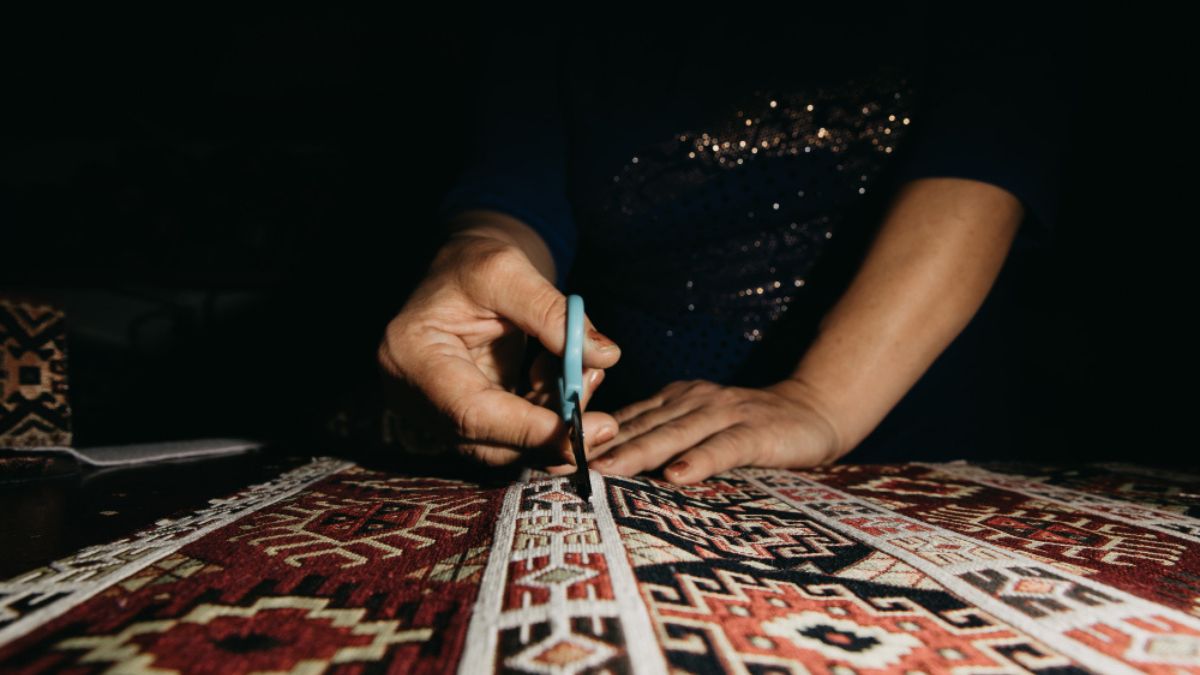
Cutting a grandparent’s thobe or ao dai into a sharp, modern shirt.
-
Pairing intricate, hand-embroidered juttis (traditional flats) with a sleek minimalist dress.
-
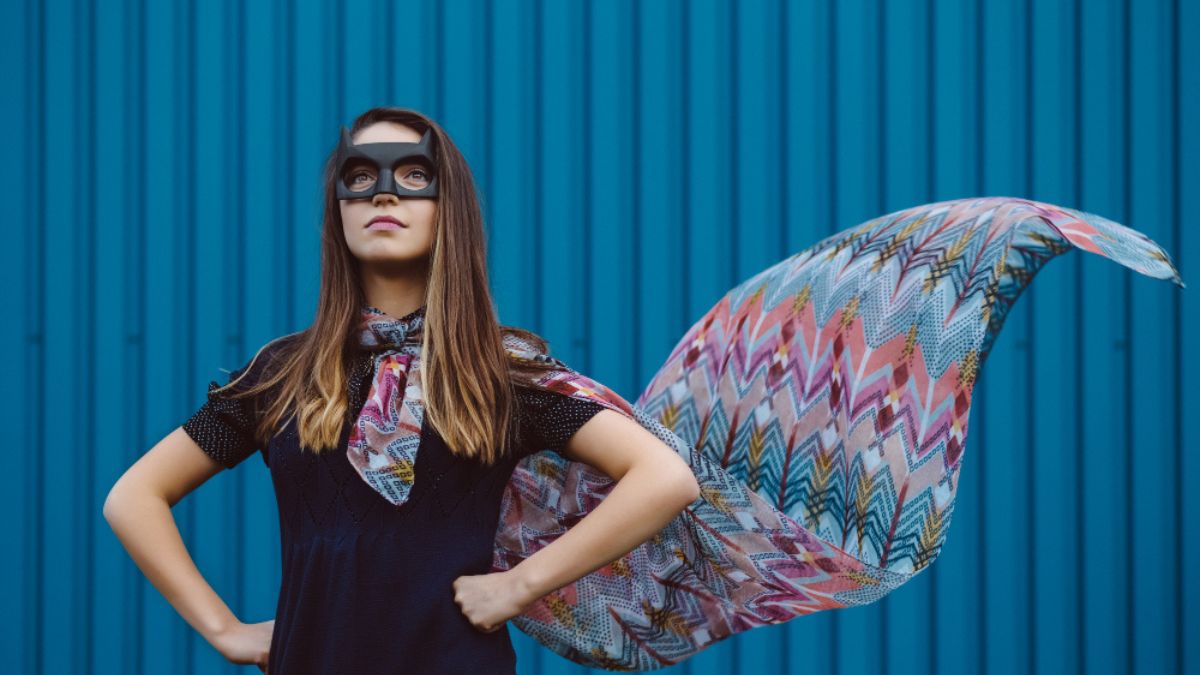
Using a furoshiki (wrapping cloth) or a tenugui as a scarf or hair wrap with a trench coat.
-
Taking the heavy zari border of a sari and turning it into a statement belt or the strap of a bag.
This was more than fashion fusion; it was identity integration. It was the conscious decision to not leave a part of oneself at home. The Hitaar was no longer a full, daunting costume. It was broken down into its constituent parts—a textile, a silhouette, an embroidery pattern, a fastening—and re-contextualized.
Technology fueled this. Instagram and Pinterest became global lookbooks. A designer in Lagos could see how someone in the Filipino diaspora in Vancouver was deconstructing a terno sleeve. A South Asian student in London could share a tutorial on how to drape a sari over trousers. The Hitaar became a shared, open-source code for cultural expression.
Part 3: The New Artisans – Weaving the Past into the Present
This grassroots movement inevitably caught the eye of the fashion industry, but the most interesting work isn’t happening via cultural appropriation on major runways. It’s happening in ateliers and studios where a new generation of designers, often from the cultures themselves, are acting as cultural translators.
These designers, like Priya Ahluwalia (Ahluwalia), Ruchika Sachdeva (Bodice), or Kenneth Ize, don’t just use traditional textiles; they collaborate with them. Their work is characterized by:
-
Elevating Craft: Treating handloom weavers and master embroiderers as co-creators, not just sources of labor. Their collections often directly support and give economic sustainability to these artisan communities.
-
Radical Silhouettes: Taking the Hitaar’s DNA and splicing it with contemporary cuts. A bandhgala jacket becomes oversized and deconstructed. A lehenga skirt is cut into a sharp, asymmetrical paneled piece. The dashiki’s silhouette is rendered in crisp, modern suiting wool.
-
Fabric Innovation: Weaving traditional ikats or madras checks with unexpected materials like latex, neoprene, or recycled polyester. It’s a dialogue between the ancient and the futuristic.
These designers are building a bridge. They make the Hitaar accessible and covetable to the generation that saw it as a burden, while fiercely protecting its provenance and intent. They answer the question, “How do we honor the past without being trapped by it?”
Part 4: The Hitaar as Political Armor
To wear a deconstructed element of your heritage in a space where it is not the norm is a political act. It is a quiet but powerful declaration of presence. The Hitaar becomes armor in several ways:
-
Against Cultural Erasure: In a homogenous global fashion landscape, choosing to wear a visible piece of your heritage is a statement of survival. It says, “We are here, and our aesthetics are valid and beautiful.”
-
Against Fast Fashion: The Hitaar is inherently slow. It is often made-to-order, handcrafted, and built to last for decades. Wearing it is a rejection of disposable culture and a commitment to mindful consumption. The garment carries the energy and time of the person who made it.
-
A Reclamation of the Gaze: For centuries, Western fashion has exoticized and fetishized “ethnic” prints and patterns, often divorcing them from their meaning. By wearing the Hitaar on their own terms—mixed, modern, and with deep understanding—wearers reclaim the narrative. They control the gaze.
We saw this powerfully in 2021, when Vice President Kamala Harris wore a deep purple dress and coat by designer Kerby Jean-Raymond of Pyer Moss, accessorized with pearls, for the inauguration. The look was modern and presidential, but the purple was a direct nod to the sorority of Black women she belonged to, and the pearls a symbol of her Howard University heritage. It was a masterclass in the Hitaar ethos: deeply rooted, forward-facing, and powerfully personal.
Part 5: The Psychological Seam – Wearing Your Inner World
Beyond the politics and the aesthetics, the deepest power of the Hitaar movement may be psychological. Getting dressed becomes an act of self-integration.
Therapy circles and mindfulness practices often speak of integrating our different “parts.” The Hitaar offers a tangible, daily practice for this. When you choose to fasten your grandmother’s brooch (a classic Hitaar accent) to your modern coat, you are literally pinning a piece of your lineage to your present-day self. You are inviting that ancestor’s strength into your boardroom meeting. You are weaving your personal history into your contemporary narrative.
It allows for a nuanced expression of identity that isn’t all-or-nothing. You don’t have to wear the full regalia to connect; a single thread, thoughtfully placed, can be enough. This is especially liberating for those with mixed heritage. A person might pair a fabric pattern from one parent’s culture with a jewelry style from another’s, physically weaving their dual inheritance into a coherent, beautiful whole.
The Future Thread: A Tapestry Still Being Woven
The Hitaar movement is not without its tensions. Purists may see deconstruction as disrespect. The line between innovation and dilution is perpetually debated. The commodification of cultural symbols remains a real risk.
But the overall direction is clear: the monolith of “traditional wear” has been shattered, and in its place is a vibrant, evolving mosaic. The Hitaar is no longer locked in a trunk. It’s in the fabric of our daily lives—sometimes literally.
It asks us to see our closets not just as collections of trends, but as personal archives and studios. It challenges the fashion industry to move beyond tokenistic “ethnic” collections into true, equitable collaboration. Most importantly, it gives us all a language—a language of thread, cut, and silhouette—to tell the complex, beautiful, and ever-evolving story of who we are.
So, look again at that garment in the back of your closet. Don’t just see an heirloom. See a Hitaar. See a set of possibilities. The question is no longer “When will I have to wear this?” but “How can I make this a part of me?” The answer is waiting, one stitch, one seam, one bold pairing at a time. The future of fashion is personal. It is political. It is ancestral. It is, unmistakably, Hitaar.